VoiceToy
Information
- Discipline
- Speculative design
- Project
- BA graduation work
- School
- Estonian Academy of Arts, Graphic Design BA
- Tutor
- Norman Orro
- Function
- Mimics vocal performance, recorded with face tracking
- Medium
- 3D, physical prototype
- Materials
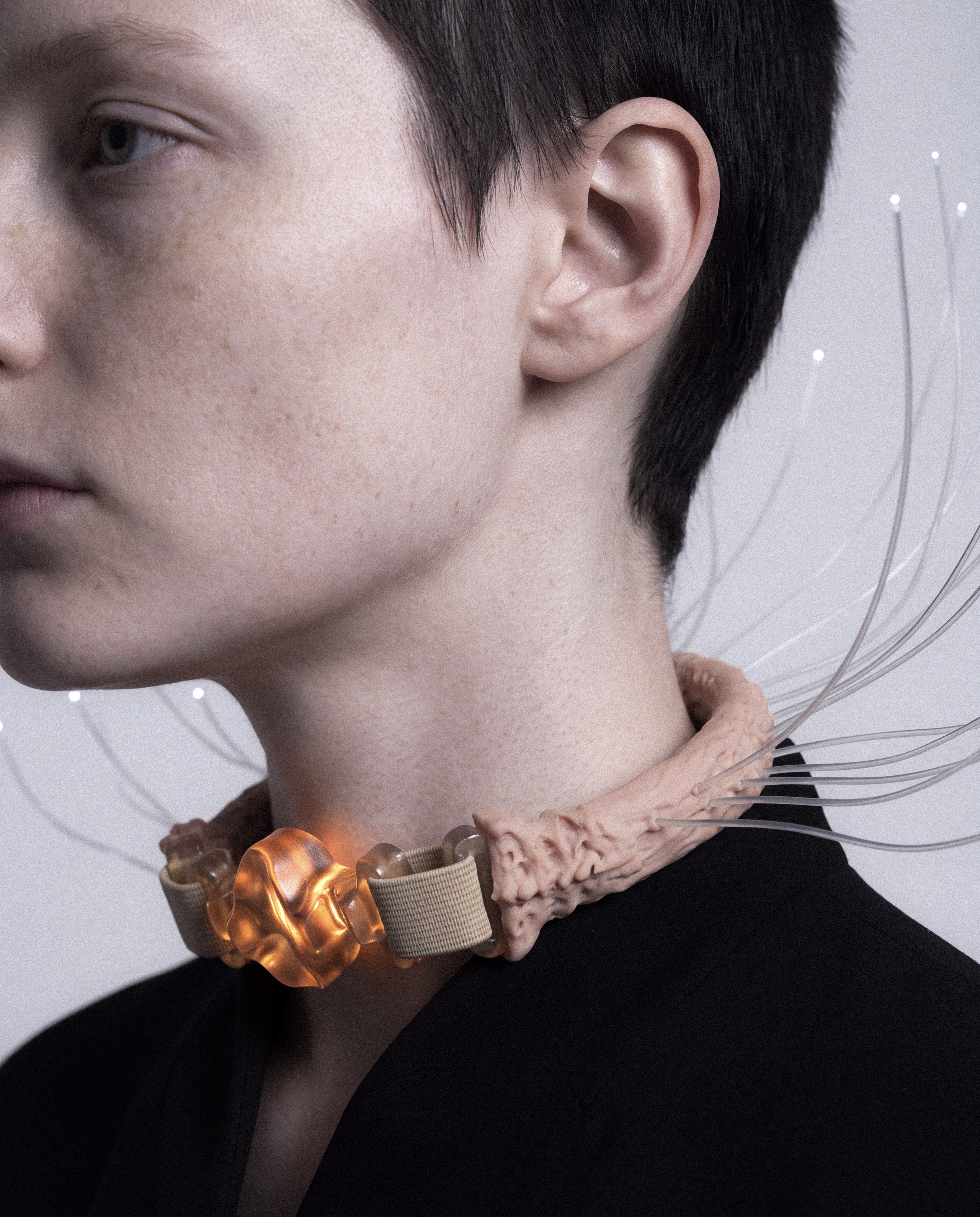
- Silicone, SLA resin, PLA, titanium wire, LEDs, elastic strap
- Year
- 2021
Description
From prehistoric roars to intellectual conversations, speech has been the most important means of communication. It allows us to form connections, motivate change and influence decisions. Without it, the ability to progress in the world would be nearly impossible.
Speech also has a limitation – how can one convey emotions and experiences through mere vocalization of words? Hand gestures can add emphasis and structure, give clues about the emotional state yet undermine itself when dealing with complex scenarios. Adding sound cues to the equation gives us the freedom to speculate in this realm, by providing a universal set of samples which most of us already have stored in our heads. Sound then becomes a vital part for telling a story by adding a layer of various samples, tunes and sound effects. It creates tension which changes our perception and binds us to that story.
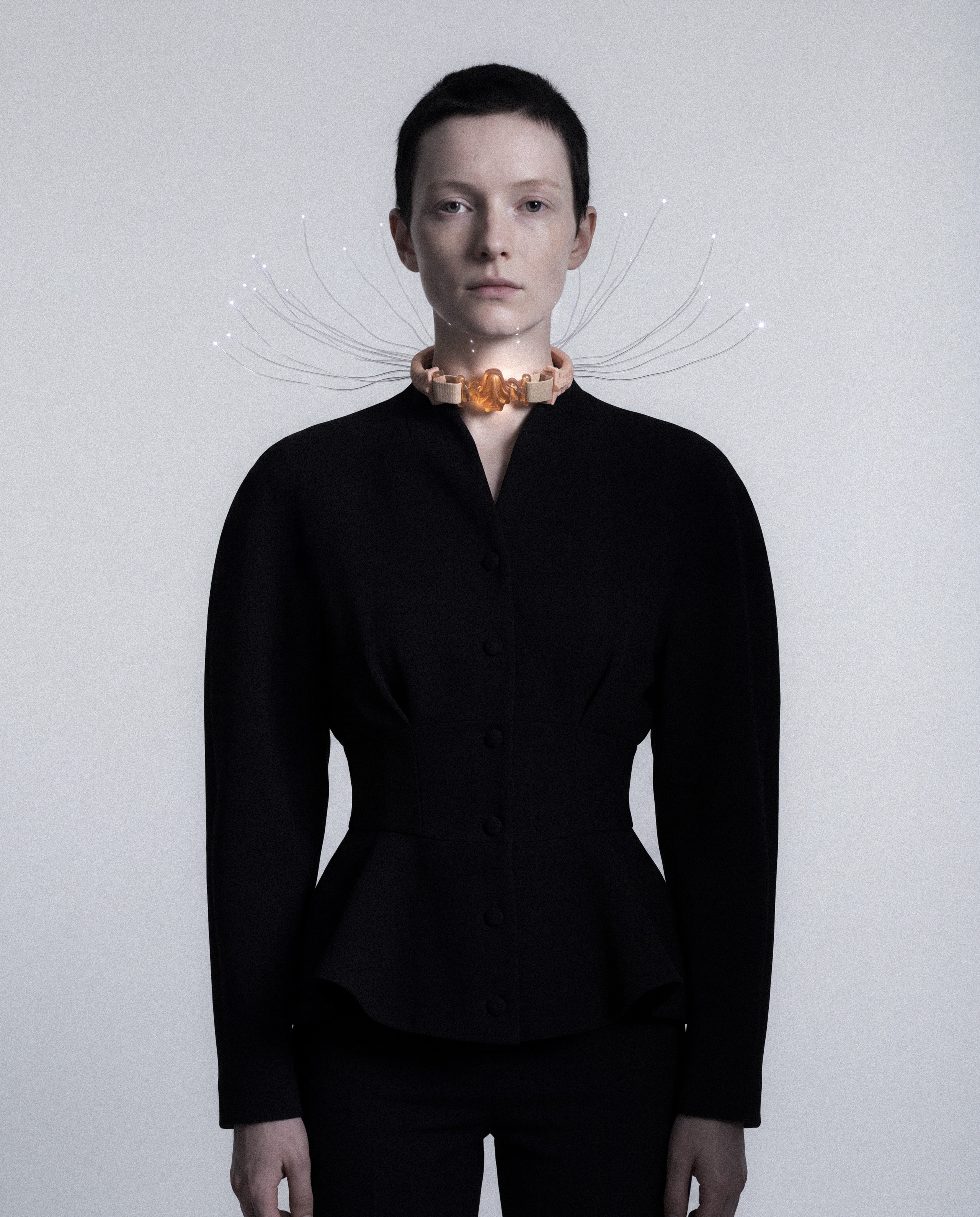
VoiceToy is a speculative tool, a voice synthesis prosthetic. It is capable of extracting a cinematic layer of audio from the storyteller’s mind and adding it on top of the conventional voice by enhancing it for further narration experience. Sensors embedded in the silicone band link the VoiceToy to the auditory cortex of the brain, which acts as an interface for the audio data to pass through to the tips of the 30 transceivers placed around the silicone band. These transceivers then vibrate accordingly, producing a near field surround sound. Its design moves away from the expectation that assistive technologies need to be concealed, and cherishes their appearance, giving us the ability to use its potential to enrich life itself.